Every great party needs a moment that makes people grin without thinking. For backyard birthdays, school field days, church picnics, and block parties, that moment often arrives with a squeal, a splash, or the boing of a well-timed bounce. I have set up more inflatables than I can count, from classic inflatable moonwalks to multi-lane summer waterslides. I have learned which rentals turn a backyard into a mini amusement park and which ones look great in photos but underperform with a mixed-age crowd. Picking the right piece is less about the flashiest option and more about matching the activity to the age, energy, and layout you actually have.
This is a practical guide to choosing between bounce houses for parties, inflatable water slides, inflatable obstacle courses, and combo units like bounce houses with slides. We will walk through safety, yard measurements, water access, electrical needs, weather realities, capacity planning, and the trade-offs that decide whether guests line up with smiles or end up on their phones.
What really drives fun: movement, rhythm, and recovery
The best inflatable setups create a loop: quick access, a burst of motion, then a reset. Kids cycle through, energy stays high, and nobody waits too long. A classic moonwalk gets the rhythm right for younger kids, who bounce, tumble, and tag each other in short bursts. A single-lane waterslide adds spectacle but can bottleneck, especially with older kids. Obstacle courses shine because they move people through in a steady stream and encourage friendly competition. The best fit depends on the ages you expect and how patient your group is with lines.
I plan for a 3 to 5 minute loop for most events. That means something like a 30 to 60 second activity, a brief wait, then another go. If lines swell beyond 10 to 12 people, the loop feels slow and kids start to wander. If you rent bounce houses for a crowd of 25 or more kids, consider either a larger unit, a two-piece layout, or a course that naturally moves participants along.
Matching inflatable types to age and vibe
A clean moonwalk with a decent footprint is the workhorse choice for preschool through second grade. It is forgiving, easy to supervise, and rarely intimidating. Add soft balls or foam batons, and kids invent their own games inside. If your event is mostly four to seven year olds, inflatable moonwalks are hard to beat.
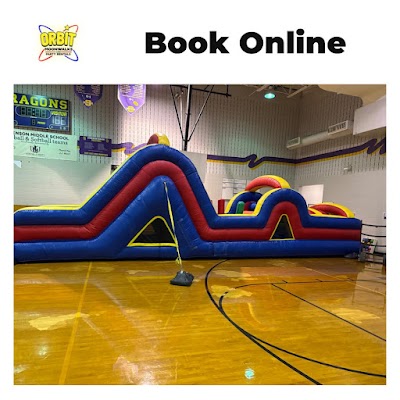
For ages eight and up, the energy tilts toward speed and challenge. Inflatable obstacle courses with crawl tunnels, pop-ups, climbing walls, and a slide at the end are crowd-pleasers. Even the shy kids eventually try to beat their time. A 30 to 40 foot course suits most yards and provides repeat-play value without hogging the entire space.
Inflatable water slides are a summer classic. For mixed ages, a 14 to 16 foot slide keeps it friendly. For tweens and teens, 18 to 22 feet hits that thrilling-but-manageable zone. Backyard water slides that empty into splash pads rather than deep pools are easier to supervise and tend to be accepted by more rental companies for residential setups. If the gathering is largely family with a range of ages, a combo unit - bounce house with slide - gives both motion patterns and avoids single-activity boredom.
The yard reality check
I always measure the space with a tape, not guesses. A unit that looks reasonable online can feel massive on real grass. Allow not just the footprint, but blower clearance, entrance room, stakes or sandbags, and safe exit pathways. A typical 13 by 13 bounce house usually needs around 15 by 15 of flat space plus 2 to 3 feet on the blower side. Obstacle courses often require a long, clear corridor of 30 to 60 feet and at least 10 to 12 feet of width. Water slides need a landing zone at the bottom with space for splash and a safe walking path back to the stairs.
If your yard slopes, put the entrance at the higher side and avoid pointing the slide downhill. A minor slope can be shimmed with pads to level the base, but a steep incline is a nonstarter. Tree branches, power lines, patio overhangs, and playset swings are typical clearance problems. Most inflatables need 15 to 20 feet of vertical clearance. Do a slow walk through the area with your hand raised to head height, then higher. Visualize the edges and how kids will move. If you have a narrow gate, check whether the rolled unit can pass through. Many standard items arrive on a dolly and can be 3 to 4 feet wide when rolled tight.
Power and water, translated into plain numbers
Every inflatable blower has a rating, often 1 to 2 horsepower. Most units need a standard 110 to 120 volt outlet on a dedicated circuit. If you plan multiple pieces, expect one blower per piece, sometimes two for larger slides or obstacle courses. Extension cords should be heavy gauge, outdoor rated, and generally not longer than 50 to 100 feet. Ask the rental company about their cords, and tell them where outlets are. A tripped breaker in the middle of the party kills momentum. When in doubt, run separate circuits from different outlets that are not tied to the same GFCI.
For water slides for rent, map the hose path. You will want an easy on-off valve near the unit, ideally a splitter with a short hose so water can be adjusted without a long jog. Flow matters more than pressure for most setups, but a weak municipal line can result in a thin trickle that disappoints on bigger slides. In drought-prone areas, check rules first and consider recirculating options using a clean trough and submersible pump, which some rental companies can provide.
Safety as design, not a speech
Good inflatable rentals are engineered around predictable behavior. Still, adults set the tone. The key is to reduce mismatches: tiny kids with big teenagers, roughhousing in tight spaces, and wet feet on dry surfaces that aren’t meant to be slick. Dry units should remain dry. If you want water, rent inflatable water slides or backyard water slides specifically designed for it. If rain is likely, ask the company what to do. Many will pause or deflate during high winds, not because they are cautious to a fault, but because gusts can lift a partially inflated unit and create hazard.
Anchoring matters more than any rule you post. Staked units into lawn hold better than sandbag-only on concrete, though both can be safe when installed correctly. If you’re putting a slide on a driveway, ask for additional ballast and non-slip pads. Watch for cumulative water at the landing area. Fatigue and slips happen when the mat turns into a lake.
I also keep a dry towel and a low-key staging area near the entrance. It sounds trivial, but clear entry and exit points prevent pileups. A single adult who watches the flow - roughly the number of kids inside and that they’re moving in the same direction - preserves fun without constant scolding.
Cost curves and value, without the guesswork
Prices vary by region and season. As a rough guide, a standard 13 by 13 bounce house might run 120 to 220 dollars for a day in many markets. Bounce houses with slides often run 200 to 350 dollars. Inflatable obstacle courses range widely, typically 250 to 600 dollars depending on length. Inflatable water slides can start around 250 for smaller units and run 400 to 800 dollars or higher for tall, dual-lane models.
Where is the value? A good lens is cost per engaged hour. If a simple moonwalk keeps 10 kids rotating for six hours, the cost per child per hour might look better than a premium slide that thrills older kids but intimidates the little ones. On the other hand, for a tween-heavy party, a taller slide or a competitive course can be the difference between enthusiasm and shrugs. For school and church events, multiple smaller stations often beat a single big showpiece because you can split the crowd and manage lines.
Weather, timing, and the art of the schedule
Heat, wind, and sun angle are quiet party killers. For summer waterslides, aim to start the water around an hour before peak heat so the surface isn’t frigid at first splash. Shade, whether natural or from a tent, makes dry units far more usable in the late afternoon. If winds are forecast above 15 to 20 mph, prepare to pause. Most reputable companies have clear wind policies, and the operator’s call should stand. Lightning within a certain radius means deflate and move people away from the unit.
Time the rental to match real attendance. Many companies offer a day rate dry and water slide rentals that covers 6 to 8 hours. If your crowd comes in waves, consider anchoring the inflatable’s peak use to the main block, then switch to yard games like cornhole, water balloons, or a sprinkler for stragglers. After sunset, visibility dips and supervision gets tougher. If you plan to run late, add simple flood lighting and confirm with the rental company that nighttime use is acceptable.
Choosing between moonwalks, combos, slides, and courses
At first glance, the catalog can feel like a candy store. Bright themes, characters, and wild shapes multiply choice. I look past the art to the physics and flow. Moonwalks offer universal accessibility, especially for ages three to seven. Bounce houses for parties with that age bracket almost never disappoint, and the theme matters more to the kids than the structural differences.
Bounce houses with slides give you the longest shelf life for a mixed-age group. Younger kids bounce while slightly older ones use the slide circuit. It reduces congestion because the slide serves as a natural exit, and the re-entry line self-regulates.
Inflatable water slides are the summer waterslides people imagine from neighborhood legends. They require more prep and cleanup, plus water logistics, but the payoff is unmistakable excitement. If your yard can handle the footprint and you have an easy water source, this category can carry an entire afternoon.
Inflatable obstacle courses stand out for school fairs, team parties, and larger gatherings. Two-lane designs encourage side-by-side races, which almost eliminates line stagnation. When you need to keep 30 or more kids engaged, a 40 to 60 foot course might be the most efficient single unit available.
A few real-world scenarios
A backyard birthday for twenty first-graders: pick a 13 by 13 moonwalk with a small front slide combo. Add a shaded parent area within sight, and a water table or sprinkler off to the side. Run 8 to 12 kids inside at a time, with a two-minute rotation. A standard hose and one 15-amp circuit should suffice. Total footprint, about 18 by 25 feet.
A middle school team party with thirty kids: an inflatable obstacle course with dual lanes, roughly 40 feet long. If budget allows, add a small free-bounce unit to absorb the downtime between races. Place the course so the start and finish are visible to each other to maintain hype. Plan two dedicated circuits. This layout tolerates short attention spans and keeps friendly rivalries front and center.
A neighborhood summer bash with mixed ages and adults who will join: go with a mid-height water slide, 16 to 18 feet, with a splash pad landing, plus a basic moonwalk for smaller kids. Put the moonwalk in partial shade. Expect to manage wet-dry pathways with mats or towels. Confirm water drainage so you don’t swamp the patio. Keep a second hose for quick rinses if grass clippings start sticking to feet.
Cleaning standards and what to ask the company
Not all inflatable rentals are maintained equally. You want a unit that arrives clean, dry, and smelling like vinyl, not mildew. I ask how they sanitize, how often they deep clean, and how they dry slides after water use. The best operators are proud to explain their process. They should use commercial disinfectants appropriate for porous surfaces, then allow full dry time to prevent mold. If a company balks at questions about cleaning or suggests that water usage “cleans it,” keep looking.
Ask about age ratings and posted capacity. Responsible companies will specify a maximum occupant number and weight guidance. They should also handle setup and anchoring, complete a quick safety review, and leave you with a contact number for issues.
Permits, HOA rules, and the quiet paperwork
Most backyard setups need no permit, but some municipalities require a permit or proof of insurance for public parks or large block parties. Homeowners associations sometimes restrict visible rentals facing the street or set hours for noise. If you plan to place stakes in a front yard near the curb, the utility line marking service is worth the extra day. A quick 811 call in many regions is free and can prevent a costly line strike.
Events at schools and churches often require certificates of insurance naming the venue as additionally insured. Serious rental companies handle this routinely. Expect a small administrative lead time, so don’t wait until the week of the event.
Sustainability and water use
In dry regions, inflatable water slides raise fair concerns about water usage. A modest single-lane slide might use hundreds of gallons over a day, largely in runoff that irrigates the grass. If that rubs against local norms or rules, the alternatives are dry slides, obstacle courses, or recirculating setups. Recirculation requires a clean reservoir that the company keeps sanitary, plus a pump rated for continuous duty. It is more complex but can reduce total consumption dramatically. Another option is limiting the water flow to a steady trickle instead of a full hose blast. Even small adjustments can reduce use without dulling the fun.
The two mistakes I see the most
First mistake: choosing a unit for looks rather than flow. Giant single-entry slides can look stunning, but if they take a long time to climb and deliver a quick ride, lines grow and temperaments cool. A less tall, dual-lane slide or a course that moves people along may be better for the same crowd size.
Second mistake: underestimating setup logistics. If the only outlet is behind a garage door that must remain open, or your only hose runs through a high-traffic doorway, the day becomes a relay of workarounds. A quick pre-visit photo from the rental company or a simple yard sketch shared ahead of time prevents surprises.
Light maintenance during the party
A few tiny habits keep the day smooth. Brush off debris at the entrance with a handheld broom or towel. Check the anchor points after the first hour, especially if the ground is soft. For water slides, occasionally adjust flow to keep the landing area manageable and to prevent splashover outside the safe zone. If the blower trips, do a step-by-step: switch off, clear the intake, confirm the cord connection, reset the GFCI, then turn back on. If a power strip is involved, remove it. Blowers prefer direct connections.
How to talk to a rental company so they can help you succeed
Clear details lead to better recommendations. When you call, share expected headcount, age ranges, event duration, yard dimensions, surface type, slope, shade, access path width, outlet locations, and water availability. If you need delivery at a particular time window, note it upfront. If you plan on ticketing or timed runs for school events, ask for a suggested run time per person. Rental operators witness what works every weekend. They will steer you toward the right fit if you give them a full picture.
A simple planning checklist
- Measure the space, including gate width, overhead clearance, and a safe perimeter. Confirm power: number of circuits, outlet locations, and acceptable cord lengths. Map water: hose path, on-off valve access, and drainage area. Match the unit to age and crowd size: moonwalk, combo, water slide, or obstacle course. Align the schedule with peak attendance, shade, and forecasted wind.
Putting it all together
When friends ask me what to rent, I start with ages and the number of kids who will actually use the inflatable at the same time. If it is mostly little ones and you want easy smiles, go with an inflatable moonwalk or a bounce house with slide. If your party is older and competitive, inflatable obstacle courses burn energy and keep lines moving. If the calendar says July and a hose is handy, inflatable water slides deliver the headline moments that people remember.
Whatever you choose, a few grounded decisions make the difference: a level spot, strong anchoring, a dedicated outlet, a hose that reaches without acrobatics, and a plan for the flow of people. When those basics are right, the rest feels effortless. The laughter will do the advertising, and you’ll spend the day enjoying the party instead of troubleshooting it. And that is the real promise of inflatable rentals: they create a place where movement becomes joy, and a backyard becomes a little world of its own.